
Bio
James A. Ferwerda is an Associate Professor in the Chester F. Carlson Center for Imaging Science at the Rochester Institute of Technology. He received a B.A. in Psychology, M.S. in Computer Graphics, and a Ph.D. in Experimental Psychology, all from Cornell University. The focus of his research is on building computational models of human vision from psychophysical experiments, and developing advanced imaging systems based on these models. He is an Associate Editor of the ACM Transactions on Applied Perception and the IS&T Journal of Perceptual Imaging, and serves on the Program Committees of the IS&T Human Vision and Electronic Imaging and Color Imaging conferences. In 2003 he was selected by the National Academy of Engineering for its Frontiers of Engineering Program and in 2010 for its Keck Futures program. In 2013 he was awarded the Xerox Chair in Imaging Science at RIT. In 2022 he was identified by a Stanford University study as one of the top 2% of cited scientists worldwide. In 2023 one of his papers was selected by ACM SIGGRAPH for inclusion in its 50th anniversary “Seminal Graphics” collection.
CV
Teaching
Rochester Institute of Technology
- Fundamentals of Color Science, 2013 – present.
- Vision and Psychophysics, 2017 – present.
- Vision Sciences Seminar, 2014 – present.
- Imaging Systems Analysis, 2007 – 2016.
- Advanced Imaging Laboratory, 2014.
- Computing for Color Science, 2008 – 2013.
- Color Measurement Laboratory II, 2008 – 2013.
Cornell University
- Special Topics in Computer Graphics, 1999-2000.
- Realistic Image Synthesis, 1998-2002.
- Practicum in Computer Graphics, 1987.
- Engineers without Frontiers, 2002-2003.
Conferences
- Fundamentals of Color Science: Munsell Color Science Laboratory, RIT, 2008-2013; ACM SIGGRAPH 2018, 2020.
- Fundamentals of Psychophysics, IS&T Color Imaging Conference 2015 – present.
- Measuring Modeling and Rendering Surface Appearance: International Seminar on Surface Metrology 2012; IS&T Color Imaging Conference 2015 – present.
- Psychophysics 101: How to Run Perceptual Experiments in Computer Graphics: ACM SIGGRAPH 2002, 2008; IEEE Visualization 2002; IS&T Color Imaging Conference 2009-2010.
- Frontiers of Perceptually-Based Computer Graphics: ACM SIGGRAPH 2003.
- Principles of Visual Perception and its Applications in Computer Graphics: ACM SIGGRAPH 1997-1998.
Recent projects
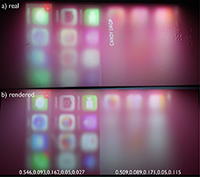
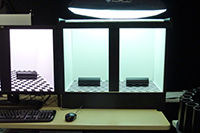
[J23] Padhye, S., Messinger, D., and Ferwerda, J.A. (2022) SVBRDF estimation using a normal sorting technique. Journal of Imaging Science & Technology, 66(5). 1-11.
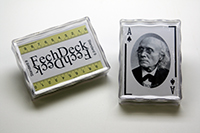
[J21] Ferwerda, J.A. (2019) The FechDeck: a hand-tool for exploring psychophysics. ACM Transactions on Applied Perception, 16(2), 1-14, https://doi.org/10.1145/3313186
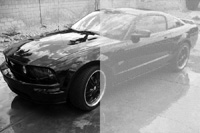
[J20] Ferwerda, J.A. (2018) Lightweight estimation of surface BRDFs. Journal of Imaging Science and Technology, 62(5), doi:10.2352/J.ImagingSci.Technol.2018.62.5.050407.
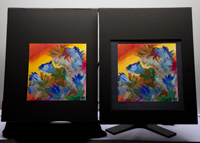
[J19] Ferwerda, J.A. (2014) ImpastoR: a realistic surface display system. Vision Research, doi: 10.1016/j.visres.2014.10.016.
[R28] Ferwerda, J.A. (2014) On pictures and stuff: image quality and material appearance. Proceedings SPIE Electronic Imaging ’14, 90180I, doi:10.1117/12.2036501
[R25] *Fores, A., Ferwerda, J.A., Tastl, I., and Recker, J. (2013) Perceiving gloss in surfaces and images. Proceedings IS&T/SID 21st Color Imaging Conference, 44-51. (Best paper award)
Selected projects

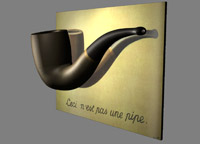
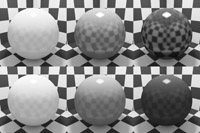
[J22] Cheeseman, J.R., Ferwerda, J.A., Maile, F.J., and Fleming, R.W. (2021) Scaling and discriminability of perceived gloss. Journal of the Optical Society of America A, 38(2), 203-210.
[J13] *Ramanarayanan, G., Ferwerda, J.A., Walter, B.J. and Bala, K. (2007) Visual equivalence: towards a new standard for image fidelity. ACM Transactions on Graphics, 26(3), (SIGGRAPH ’07), 1-11.
[C02] Ferwerda, J.A (2003) Three varieties of realism in computer graphics. Proceedings SPIE Human Vision and Electronic Imaging ’03, 290-297. (paper/presentation)
[J07] *Pellacini, F., Ferwerda, J.A. and Greenberg, D.P. (2000) Toward a psychophysically-based light reflection model for image synthesis. Proceedings SIGGRAPH ’00, 55-64.
[J06] Pattanaik, S., Ferwerda, J.A., Fairchild, M.D. and Greenberg, D.P. (1998) A multiscale model of adaptation and spatial vision for realistic image display. Proceedings SIGGRAPH ’98, 287-298.
[J03] Ferwerda, J.A., Pattanaik, S., Shirley, P. and Greenberg, D.P. (1996) A model of visual adaptation for realistic image synthesis. Proceedings SIGGRAPH ’96, 249-258.
Publications
Refereed journal articles:
[J23] Padhye, S., Messinger, D., and Ferwerda, J.A. (2022) SVBRDF estimation using a normal sorting technique. Journal of Imaging Science & Technology, 66(5). 1-11.
[J22] Cheeseman, J.R., Ferwerda, J.A., Maile, F.J., and Fleming, R.W. (2021) Scaling and discriminability of perceived gloss. Journal of the Optical Society of America A, 38(2), 203-210.
[J21] Ferwerda, J.A. (2019) The FechDeck: a hand-tool for exploring psychophysics. ACM Transactions on Applied Perception, 16(2), 1-14, https://doi.org/10.1145/3313186
[J20] Ferwerda, J.A. (2018) Lightweight estimation of surface BRDFs. Journal of Imaging Science and Technology, 62(5), doi:10.2352/J.ImagingSci.Technol.2018.62.5.050407.
[J19] Ferwerda, J.A. (2014) ImpastoR: a realistic surface display system. Vision Research, doi: 10.1016/j.visres.2014.10.016.
[J18] Ferwerda, J.A., Stillwell, A., Hovagimian, H., and Kosik Williams, E. (2014) Perception of sparkle in anti-glare display screens. Journal of the Society for Information Display, 22(2), 139-146.
[J17] Ferwerda, J.A., (2013) Tangible Images: bridging the real and virtual worlds. Springer Lecture Notes in Computer Science, Vol. 7786, 13-24.
[J16] Krivanek, J. Ferwerda, J.A. and Bala, K. (2010) Effects of global illumination approximations on material appearance. ACM Transactions on Graphics, 29(4), (SIGGRAPH ’10), 1-10.
[J15] Ferwerda, J.A. (2010) Envisioning the material world (invited review article). Vision: Journal of the Vision Society of Japan, 1-11.
[J14] *Ramanarayanan, G., Bala, K. and Ferwerda, J.A. (2008) Perception of complex aggregates. ACM Transactions on Graphics, 27(3), (SIGGRAPH ’08), 1-10.
[J13] *Ramanarayanan, G., Ferwerda, J.A., Walter, B.J. and Bala, K. (2007) Visual equivalence: towards a new standard for image fidelity. ACM Transactions on Graphics, 26(3), (SIGGRAPH ’07), 1-11.
[J12] *Stokes, W., Ferwerda, J.A., Walter, B.J. and Greenberg, D.P. (2004) Perceptual Illumination Components: A new approach to efficient, high quality global illumination rendering. ACM Transactions on Graphics, 23(3). (SIGGRAPH ’04), 742-749.
[J11] Dumont, R., *Pellacini, F. and Ferwerda, J.A. (2003) Perceptually-driven decision theory for interactive realistic rendering. ACM Transactions on Graphics 22(2), 152-181.
[J10] *Reinhard, E., Stark, M., Shirley, P. and Ferwerda, J.A. (2002) Photographic tone reproduction for digital images. ACM Transactions on Graphics, 21(3), (SIGGRAPH ’02), 267-276.
[J09] Thompson, W., Shirley, P. and Ferwerda, J.A. (2002) A spatial post-processing algorithm for images of night scenes. Journal of Graphics Tools 7(1), 1-12.
[J08] Ferwerda, J.A. (2001) Elements of early vision for computer graphics. IEEE Computer Graphics and Applications, 21(5), 22-33.
[J07] *Pellacini, F., Ferwerda, J.A. and Greenberg, D.P. (2000) Toward a psychophysically-based light reflection model for image synthesis. Proceedings SIGGRAPH ’00, 55-64.
[J06] Pattanaik, S., Ferwerda, J.A., Fairchild, M.D. and Greenberg, D.P. (1998) A multiscale model of adaptation and spatial vision for realistic image display. Proceedings SIGGRAPH ’98, 287-298.
[J05] Ferwerda, J.A., Pattanaik, S., Shirley, P. and Greenberg, D.P. (1997) A model of visual masking for computer graphics. Proceedings SIGGRAPH ’97, 143-152.
[J04] Greenberg, D.P., Torrance, K.T., Shirley, P., Arvo, J., Ferwerda, J.A., Pattanaik, S., Lafortune, E., Walter, B., Foo, S. and Trumbore, B. (1997) A framework for realistic image synthesis. Proceedings SIGGRAPH ’97, 477-494.
[J03] Ferwerda, J.A., Pattanaik, S., Shirley, P. and Greenberg, D.P. (1996) A model of visual adaptation for realistic image synthesis. Proceedings SIGGRAPH ’96, 249-258.
[J02] *Wanger, L.R., Ferwerda, J.A. and Greenberg, D.P., (1992) Perceiving spatial relationships in computer-generated images. IEEE Computer Graphics and Applications, 12(3), 44-58.
[J01] Ferwerda, J.A. and Greenberg, D.P. (1988) A psychophysical approach to assessing the quality of antialiased images. IEEE Computer Graphics and Applications, 8(5), 85-95.
Refereed conference proceedings:
[R34] Ferwerda, J.A. and Padhye, S.A. (2021) Visual perception of surface properties through manipulation. Proceedings 29th IS&T Color and Imaging Conference, 66-70, https://doi.org/10.2352/issn.2169-2629.2021.29.66
[R33] Padhye, S., Messinger, D., and Ferwerda, J. A. (2021) A practitioner’s guide to fringe projection profilometry. Proceedings IS&T Archiving Conference 2021 (18), 56-60.
[R32] Padhye, S., Messinger, D., and Ferwerda, J. A. (2021) A simple web-based tool for multi-spectral surface visualization. In SPIE Algorithms, Technologies, and Applications for Multispectral and Hyperspectral Imaging XXVII (Vol. 11727), 265-272.
[R31] Padhye, S.A., Messinger, D., and Ferwerda, J.A. (2021) A web-based visualization tool for multispectral images. Proceedings IS&T Electronic Imaging ’21, 33, 1-6.
[R30] Ferwerda, J. A., Bulatov, V., and Gardner, J. (2016) Evaluating the effectiveness of auditory and tactile surface graphs for the visually impaired. Proceedings IS&T Electronic Imaging ’16 (HVEI), 28, 1-6. https://doi.org/10.2352/ISSN.2470-1173.2016.16.HVEI-100
[R29] Ferwerda, J.A. (2015) Image quality and material appearance. Proceedings 1st International Conference on Advanced Imaging, Tokyo, Japan, 1-4.
[R28] Ferwerda, J.A. (2014) On pictures and stuff: image quality and material appearance. Proceedings SPIE Electronic Imaging ’14, 90180I, doi:10.1117/12.2036501
[R27] Priess, J., Fairchild, M.D., Ferwerda, J.A., and Urban, P. (2014) Gamut mapping in a high-dynamic range color space. Proceedings SPIE Electronic Imaging ’14, 90150A, doi:10.1117/12.2039747
[R26] Liu, X., Chen, L., Ortiz-Segovia, M., Ferwerda, J.A., and Allebach, J. (2014) Characterization of relief printing. Proceedings SPIE Electronic Imaging ’14, 90180P, doi:10.1117/12.2040977
[R25] *Fores, A., Ferwerda, J.A., Tastl, I., and Recker, J. (2013) Perceiving gloss in surfaces and images. Proceedings IS&T/SID 21st Color Imaging Conference, 44-51. (Best paper award)
[R24] *Hensley, B. and Ferwerda, J.A. (2013) Colorimetric characterization of a 3D printer with a spectral model. Proceedings IS&T/SID 21st Color Imaging Conference, 160-166.
[R23] Gollier, J., Piech, G., Hart, S., West, J., Hovagimian, H., Kosik Williams, E., *Stillwell, E., and Ferwerda, J.A. (2013) Display sparkle measurement and human response. Proceedings of the Society for Information Display, 1-3.
[R22] *Stillwell, A., Ferwerda, J.A., Hovagimian, H., and Kosik Williams, E. (2013) Perception of sparkle in anti-glare display screens. Proceedings of the Society for Information Display, 1-3. (Distinguished paper award)
[R21] Ferwerda, J.A. (2013) Tangible imaging systems. Proceedings SPIE Electronic Imaging ’13 (Invited keynote paper), 86640M, doi:10.1117/12.2010968
[R20] Ferwerda, J.A. (2012) Through a glass brightly: material appearance and image quality. In: Predicting Perceptions: 3rd International Conference on Material Appearance, 32-33.
[R19] *Darling, B.A. and Ferwerda, J.A. (2012) Seeing virtual objects: simulating reflective surfaces on emissive displays. Proceedings IS&T/SID 20th Color Imaging Conference, 135-141.
[R18] *Fores-Herranz, A., Ferwerda, J.A., and Gu, J. (2012) Toward a perceptually-based metric for BRDF modeling. Proceedings IS&T/SID 20th Color Imaging Conference, 142-148.
[R17] Ferwerda, J.A. (2011) High dynamic range displays and low vision. Proceedings IS&T/SID 19th Color Imaging Conference, 181-185.
[R16] *Blatner, A.M., Ferwerda, J.A., Darling, B.A. and Bailey, R.J. (2011) TangiPaint: a tangible digital painting system. Proceedings IS&T/SID 19th Color Imaging Conference, 102-107.
[R15] *Darling, B.A., Ferwerda, J.A., Chen, T. and Berns, R. (2011) Real-time multi-spectral rendering with complex illumination. Proceedings IS&T/SID 19th Color Imaging Conference, 345-351.
[R14] Ferwerda, J.A. (2010) Effects of mesoscale texture on apparent surface gloss. Proceedings 2nd CIE Expert Symposium on Appearance, 1-4.
[R13] Ferwerda, J.A., *Selan, J. and Pellacini, F. (2010) Perception of lighting errors in image compositing. Proceedings IS&T/SID 18th Color Imaging Conference, 375-380.
[R12] Ferwerda, J.A., *Kalghatgi, S. and Darling, B. (2010) A multiscale analysis of the touch-up problem. Proceedings IS&T/SID 18th Color Imaging Conference, 266-271.
[R11] *Zhang, D. and Ferwerda, J.A. (2010) Appearance-based image splitting for HDR displays. Proceedings IS&T/SID 18th Color Imaging Conference, 340-346.
[R10] *Darling, B.A. and Ferwerda, J.A. (2009) The tangiBook: a tangible display system for direct interaction with virtual surfaces. Proceedings IS&T 17th Color Imaging Conference, 260-266. (Best paper award)
[R09] *Phillips, J.B. and Ferwerda, J.A. (2009) Effects of dynamic range on apparent surface gloss. Proceedings IS&T 17th Color Imaging Conference, 193-197.
[R08] Ferwerda, J.A., *Ramanarayanan, G., Bala, K. and Walter, B.J (2008) Visual Equivalence: an object-based approach to image quality. Proceedings IS&T 16th Color Imaging Conference, 347-354.
[R07] Bala, K., Ferwerda, J.A. and Walter, B.J. (2006) Information-preserving imaging for heterogeneous networked displays. Workshop on Information Visualization and Interaction Techniques across Multiple Displays, ACM CHI ’06, 1-4.
[R06] *Irawan, P., Ferwerda, J.A and Marschner, S.R. (2005) Perceptually-based tone mapping of high dynamic range image streams. Eurographics Symposium on Rendering, 231-242.
[R05] Ferwerda, J.A, Westin, S.H., Smith, R.C. and Pawlicki, R. (2004) Effects of rendering on shape perception in automobile design. First ACM Symposium on Applied Perception in Graphics and Visualization, 107-114.
[R04] Ferwerda, J.A and *Pellacini, F. (2003) Functional difference predictors (FDPs): measuring meaningful image differences. Asilomar Conference on Signals, Systems, and Computers, 1388-1392.
[R03] Dumont, R., *Pellacini, F. and Ferwerda, J.A. (2001) Perceptually-based texture caching for hardware rendering. Proceedings 12th Eurographics Workshop on Rendering, 246-256.
[R02] Pattanaik, S.N., Fairchild, M.D., Ferwerda, J.A. and Greenberg.D.P. (1998) Multiscale model of adaptation, spatial vision and color appearance. Proceedings IS&T 6th Color Imaging Conference, 2-7.
[R01] Pattanaik, S.N., Ferwerda, J.A., Torrance, K.E. and Greenberg, D.P. (1997) Validation of global illumination simulations through CCD camera measurements. Proceedings IS&T 5th Color Imaging Conference, 250-253.
Conference papers, posters, abstracts, presentations:
[C32] Cheeseman, J.R., Ferwerda, J.A., Morimoto, T., and Fleming, R.W. (2023) Predicting gloss sensitivity across variations in surface shape, illumination and viewpoint. Journal of Vision, 23(9), 5362. https://doi.org/10.1167/jov.23.9.5362.
[C31] Cheeseman, J.R., Ferwerda, J.A., Morimoto, T., and Fleming, R.W. (2022) Consistent and predictable variations in gloss discrimination across viewing conditions. PERCEPTION 51(1), 45.
[C30] Padhye, S., Messinger, D., and Ferwerda, J.A. (2022) SVBRDF estimation using a normal sorting technique. Proceedings ACM SIGGRAPH 2022 Posters, 1-2.
[C29] Padhye, S., Doerschner, K., Phillips, F., and Ferwerda, J. (2021) Visual perception of surface properties through direct manipulation. Journal of Vision, 21(9), 2424. https://doi.org/10.1167/jov.21.9.2424
[C28] Padhye, S.A., and Ferwerda, J.A. (2021) Real-time illumination capture and rendering on mobile devices. Frameless Journal, 4(1), 33.
[C27] Padhye, S.A., A Ferwerda, J., and Messinger, D. (2020) Digital modeling of cultural heritage objects. Frameless Journal, 3(1), 3.
[C26] Amiri, M.M., Binaee, K., and Ferwerda, J. (2019) A comparison of colorimetric performance of Oculus and HTC virtual reality headsets. Frameless Journal, 1(1), 18.
[C25] Ferwerda, J.A., (2018) PsychoPysics: a suite of tools for teaching Psychophysics using PsychoPy. Vision Sciences Society Annual Meeting, doi: TBD, (abstract/poster)
[C24] Ferwerda, J. (2017). Visual estimation of surface BRDF. Vision Sciences Society Annual Meeting, 17(10):767-767. doi: 10.1167/17.10.767 (abstract/poster)
[C23] Ferwerda, J.A., (2015) The FechDeck: a hand-tool for exploring psychophysics. Vision Sciences Society Annual Meeting, Journal of Vision, 15(12), doi: 10.1167/14.10.453 (abstract/poster)
[C22] Ferwerda, J.A., (2014) Perceiving gloss in surfaces and images. Vision Sciences Society Annual Meeting, Journal of Vision, 14(10), doi: 10.1167/14.10.453 (abstract/poster)
[C21] Ferwerda, J.A., Stillwell, A., Hovagimian, H., and Kosik Williams, E. (2013) Visibility of artifacts in flat panel displays. Center for Electronic Imaging Systems (CEIS) Annual Meeting. (abstract/poster)
[C20] Ferwerda, J.A. (2012) Through a glass brightly: seeing through the surface in image quality. Vision Sciences Society, Annual Meeting, Journal of Vision, 12(9), 872a. (abstract/poster)
[C19] Ferwerda, J.A. (2012) Tangible display systems: bringing virtual surfaces into the real world. Proceedings SPIE Electronic Imaging ’12 (Human Vision and Electronic Imaging XVII), 8291 1-10. (paper/presentation)
[C18] Ferwerda, J.A. and *Phillps, J.B. (2010) Effects of image dynamic range on perceived surface gloss. Vision Sciences Society, 9th Annual Meeting, Journal of Vision, 10(7), 387. (abstract/poster)
[C17] *Kalghatgi, S. and Ferwerda, J.A. (2010) Effects of microscale and mesoscale structure on surface appearance. (abstract). Vision Sciences Society, 9th Annual Meeting, Journal of Vision, 10(7), 449. (abstract/poster)
[C16] *Zhang, D. and Ferwerda, J.A. (2010) A low-cost, color-calibrated, reflective high dynamic range display (abstract). Vision Sciences Society, 9th Annual Meeting, Journal of Vision, 10(7), 397. (abstract/poster)
[C15] Ferwerda, J.A. (2010) The medium and the message: a revisionist view of image quality. Proceedings SPIE Electronic Imaging ’10 (Human Vision and Electronic Imaging XV), 7257 0J 1-11. (paper/presentation)
[C14] *Darling, B.A. and Ferwerda, J.A. (2010) Tangible Display Systems: direct interfaces for computer-based studies of surface appearance. Proceedings SPIE Electronic Imaging ’10 (Human Vision and Electronic Imaging XV), 7257 0Q 1-12. (paper/presentation)
[C13] *Phillips, J., Ferwerda, J.A., and *Nunziata, A. (2010) Gloss discrimination and eye movements. Proceedings SPIE Electronic Imaging ’10 (Human Vision and Electronic Imaging XV), 7257 0Z 1-12. (paper/presentation)
[C12] *Luka, S and Ferwerda, J.A. (2009) Colorimetric image splitting for high dynamic range displays. Proceedings SID 2009 Annual Conference, 1298-1301. (paper/poster)
[C11] Ferwerda, J.A. and *Luka, S. (2009) A high resolution high dynamic range display for vision research. Vision Sciences Society, 8th Annual Meeting, Journal of Vision, 9(8), 346a. (abstract/poster)
[C10] *Darling, B.A. and Ferwerda, J.A. (2009) The situated laptop: a tangible interface for computer-based studies of surface appearance. Vision Sciences Society, 8th Annual Meeting, Journal of Vision, 9(8), 324a. (abstract/poster)
[C09] *Ramanarayanan, G., Ferwerda, J.A., Bala, K. and Walter, B.J (2008) Dimensionality of visual complexity in computer graphics scenes. Proceedings SPIE Electronic Imaging ’08 (Human Vision and Electronic Imaging XIII), 1-10. (paper/presentation)
[C08] Ferwerda, J.A. and Arditi, A. (2008) Are high dynamic range displays bad for the eyes? Council on Optical Radiation Measurement, Proceedings of the Annual Meeting (CORM 2008), 1.1 (abstract/presentation)
[C07] Ferwerda, J.A, *Irawan, P. and Marschner S.R. (2008) Simulating low vision in high dynamic range scenes. Council on Optical Radiation Measurement, Proceedings of the Annual Meeting (CORM 2008), 1.4 (abstract/presentation)
[C06] Ferwerda, J.A. and *Rehon, B. (2007) MagnoFly: game-based screening for dyslexia. 7th Annual Meeting, Vision Sciences Society, Journal of Vision, 7(9), 520a. (abstract/poster)
[C05] Ferwerda, J.A. and Arditi A. (2006) High dynamic range displays and the blue light hazard. 6th Annual Meeting, Vision Sciences Society, Journal of Vision, 6(6), 70a. (abstract/poster)
[C04] Ferwerda, J.A. and *Ang, P.C. (2004) Dalton’s Jungle: a video game for assessing color anomalies in children’s vision. 4th Annual Meeting, Vision Sciences Society, Journal of Vision, 4(8), 310a. (abstract/poster)
[C03] Ferwerda, J.A., *Irawan, P., and Marschner, S.R. (2004) Simulating low vision in high dynamic range scenes. 4th Annual Meeting, Vision Sciences Society, Journal of Vision, 4(8), 879a. (abstract/poster)
[C02] Ferwerda, J.A (2003) Three varieties of realism in computer graphics. Proceedings SPIE Human Vision and Electronic Imaging ’03, 290-297. (paper/presentation)
[C01] Ferwerda, J.A., *Pellacini, F. and Greenberg, D.P. (2001) A psychophysically-based model of surface gloss perception. Proceedings SPIE Human Vision and Electronic Imaging ’01, 291-301. (paper/presentation)
Chapters, monographs and tutorials:
[M03] Ferwerda, J.A. (2008) Psychophysics 101: how to run perception experiments in computer graphics. Course notes, Course , SIGGRAPH ’08, 1-27.
[M02] Ferwerda, J.A. (1997) Fundamentals of spatial vision. In V. Interrante (Ed.) Principles of Visual Perception and its Applications in Computer Graphics, Course 33, SIGGRAPH ’97, 1-27.
[M01] Ferwerda, J.A. (1991) Psychophysical methods. In B. Guenter (Ed.) Understanding Visual Perception and its Impact on Computer Graphics. Course 9 SIGGRAPH ’91, 3:1-38.
Technical reports:
[T05] *VanGorp, P., *Condon, T., Ferwerda, J.A., Bala, K., Schoukens, R., and Dutre, P. (2009) Visual equivalence in dynamic scenes. Department of Computer Science, Katholieke Universiteit Leuven, Tech. Rep. CW 557.
[T04] *Jensen, H.W., *Premoze, S., Shirley, P., Thompson, W.B., Ferwerda, J.A., and *Stark, M.M. (2000) Night rendering. Department of Computer Science, University of Utah, Tech. Rep. UUCS-00-016.
[T03] Ferwerda, J.A. (1993) GV-STC digital media network. Program of Computer Graphics, Cornell University, PCG-93-4.
[T02] Ferwerda, J.A. (1993) GV-STC video widgets. Program of Computer Graphics, Cornell University, PCG-93-2.
[T01] Ferwerda, J.A., Rose, J.A., and Yoo, T.S. (1993) A widely distributed video teleconferencing environment. Program of Computer Graphics, Cornell University, PCG-93-1.
Popular press:
[P18] ACM SIGGRAPH (August 2023) “Seminal Graphics Papers: Pushing the Boundaries, Vol. 2“
[P17] RIT News (Nov, 21, 2022) “RIT researchers included on Stanford University’s list of the world’s top 2% of scientists.”
[P16] SPIE Newsroom, (Jan. 28, 2013) “Tangible Imaging Systems Merge Real and Virtual Worlds.”
[P15] Research at RIT, (Spring/Summer 2012) “The Science of Color.”
[P14] National Association of Broadcasters, NABShow Blog (3/29/10) “The tangiBook.”
[P13] IS&T Reporter (Jan./Feb. 2010) “The tangiBook: A tangible display system for direct interaction with virtual surfaces.”
[P12] RIT Athenaeum (5/1/10) “The tangiBook.”
[P11] Research at RIT (5/1/10) “Bringing virtual surfaces into the real world.”
[P10] Cornell Daily Sun (3/8/06) “Duffield showcases BOOM technology.”
[P9] Nature (6/2/05) “Scientists with disabilities: access all areas.”
[P8] Cornell Engineering Magazine (Spring ’05) “Coloring sound.”
[P7] Cornell Daily Sun (2/17/05) “CU student’s software uses sound to aid blind.”
[P6] BBC News (2/14/05) “Blind student ‘hears’ in colour.”
[P5] Cornell Chronicle (1/27/05) “Blind graduate student ‘reads’ maps using CU software that converts color into sound.”
[P4] Cornell Chronicle (2/5/04) “Thanks to CU project L-VIS is in the library.”
[P3] Cornell Chronicle (12/13/01) “Low-vision sufferers could be aided by CU computer graphics technology.”
[P2] Cornell Daily Sun (11/15/01) “Computer graphics research may lead to electronic eyes.”
[P1] Computer Graphics World (10/1/01) “Seeing with the minds eye.”
 James Ferwerda